
Data Driven Marketing
Campaign reporting in real time, without a single manual step

The entire trading portfolio of Central Energy Trade Hungary Group runs in a single cloud system: data collection, machine learning forecasts, exchange trading, regulatory reporting and invoicing. Daily portfolio management is automated instead of manual, and decisions are backed by interactive dashboards.

The CET portfolio covers energy consumers, producers and wholesale partners. When production and consumption forecasts are off, the missing volume has to be covered with expensive balancing energy. The group therefore asked for a system that does not solve isolated tasks but holds the whole daily operation together: it collects the data, forecasts the trends, calculates the portfolio balance, trades on the exchange and shows all of it on a clear interface. The business stakes are simple: better forecasts, better deals, lower balancing costs.
The software we built covers the full daily cycle of energy trading, from data collection to invoicing. Manual steps were replaced by automated processes, and decisions are now backed by machine learning forecasts.
Production and consumption data, weather, energy prices and calendar information arrive in the cloud database automatically and on schedule, both from e-mail and from real time server connections.
The models forecast trends separately for each production and consumption unit, taking weather, public holidays and historical consumption patterns into account.
Based on fresh predictions, the trading module covers gaps on the exchange, files the required data with the Hungarian TSO and issues consumer invoices automatically.

Central Energy Trade Hungary Group works in energy trading, innovative investments and renewable energy development. Based on years of trading experience, they see the future in supporting their processes with modern software and automating manual steps.
Their portfolio covers consumers, producers and wholesale partners, where production and consumption are represented by units, so called PODs or points of delivery. They asked Dmlab to build a complex data collection, portfolio management and trading solution on top of this structure. We ran the work in the phases we use on every data project, from understanding the business problem to putting the model into operation.
The software has to manage data for every client and point of delivery, collect production and consumption readings, weather and price data in real time, and forecast the output of solar farms and the consumption of individual clients.
On top of that it has to trade automatically on the energy exchange based on those forecasts, generate invoices for consumer clients, support strategic planning through dashboards, and finally monitor its own operation and raise an alert when something goes wrong.


The solution draws on many data sources. Solar farms send production data by e-mail, while real time consumption readings are collected directly from the relevant servers. Dedicated collector modules bring in daily energy prices, weather forecasts and calendar information on schedule, and the trading module writes the results of its own transactions back into the database.
Production and consumption trends are shaped by weather, public holidays and historical patterns alike. The software therefore builds predictive models that use machine learning to forecast expected volumes, down to individual production and consumption units. These forecasts drive the portfolio balance and the trading decisions.


Using the latest predictions, the system calculates the current and future balance across the entire client base, that is, how much energy has to be bought or sold and when, and from that the monetary value of the portfolio. The trading module settles emerging gaps in intraday trading and automatically files the required balance data.
Thanks to the invoicing integration, invoices for consumer clients are generated according to the agreed pricing, and producer clients automatically receive the data they need to issue their own invoices. Automated e-mails also deliver unit level forecasts to the clients.
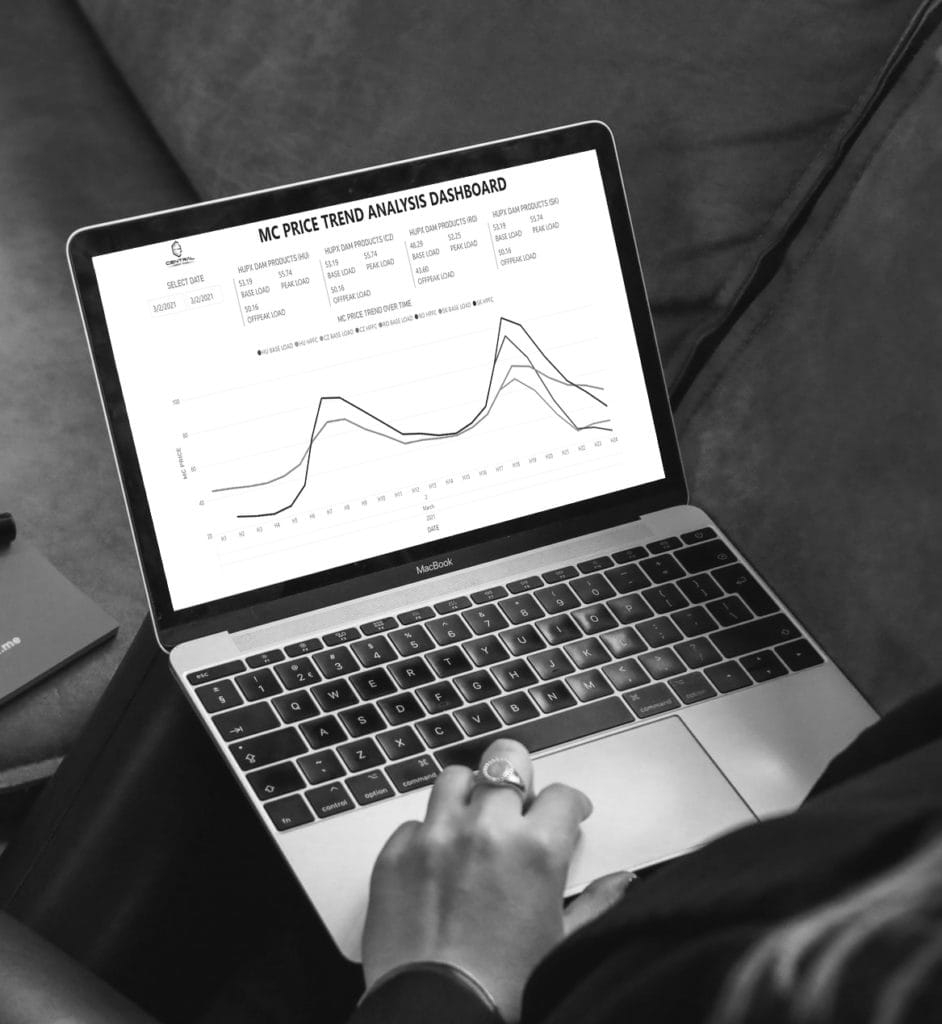
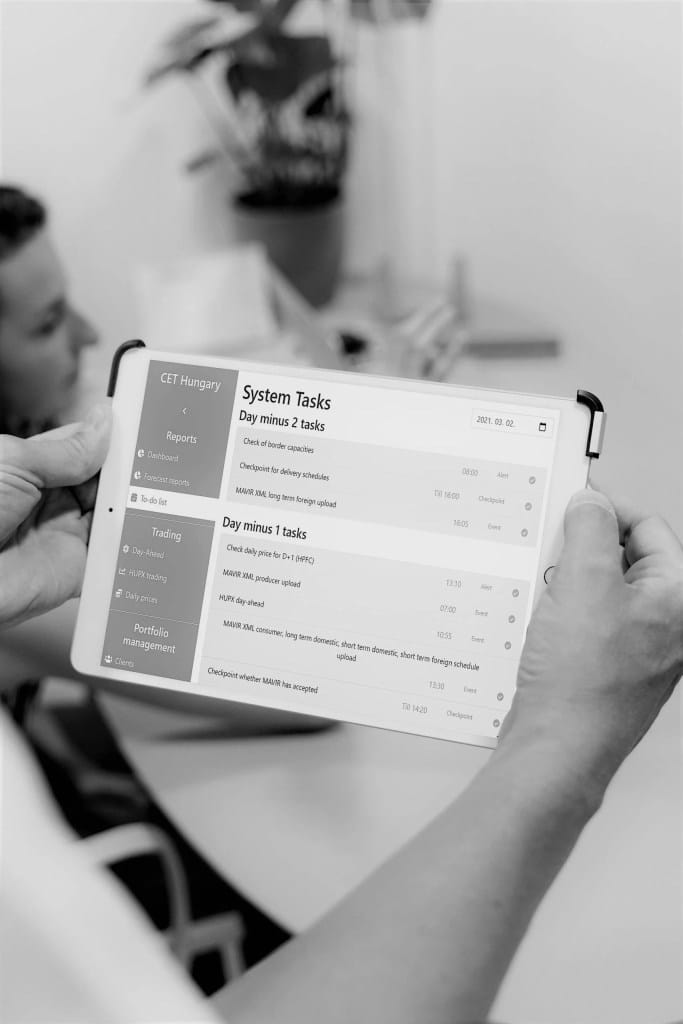
The software provides a responsive browser interface where the current trading position and the daily tasks are visible from any device. The Power BI-based dashboards bring together production and consumption patterns, energy prices, weather forecasts, current and future balance predictions, and the data needed for strategic planning, such as available cross border transmission capacity.

The finished software became a core element of CET trading operations. Portfolio management processes are significantly simpler, automated trading made the daily routine faster and more transparent, and the dashboards show the value of the portfolio along with consumer and producer trends at a glance. Backed by machine learning forecasts, the group plans further ahead and closes deals on better terms.
Automating a single task already pays off, but the real leap comes when the whole process, from data collection through trading and regulatory reporting to invoicing, runs in one data driven system. That is the level CET reached, and it opened the plan for the next phase: the group will give its own clients an interface where they can follow their data and forecasts. Most data science projects that stall do so not because the model is wrong, but because the results never reach daily operations. Our energy market solutions are now carried forward by our dedicated brand, nexten.ai.
Campaign reporting in real time, without a single manual step

Data driven fuel and transit time planning in road freight